War is on everyone’s minds right now. And things may start to escalate quickly.
Because a Republican senator wants President Trump to attack this major country.
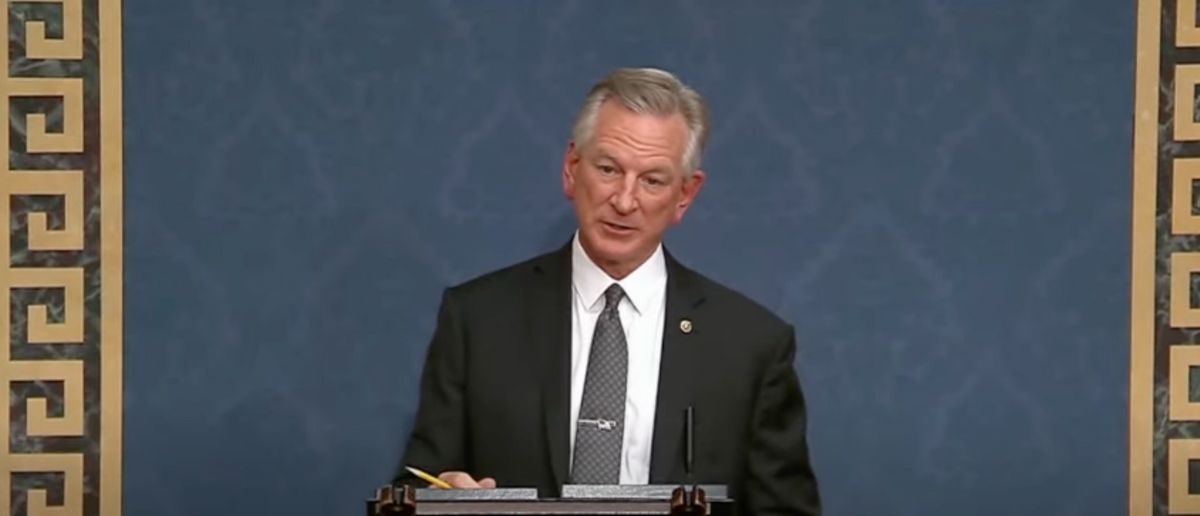
Alabama Senator Tommy Tuberville is making waves again, and this time he’s laying out a strategy that many Americans fed up with weak foreign policy may find refreshing. Speaking on The Bottom Line on the Fox Business Network, Tuberville didn’t mince words about how the United States should deal with Iran.
At a time when global tensions are rising and adversaries are testing America’s resolve, Tuberville is calling for strength, clarity, and decisive action. His message is simple: the United States needs to stop playing defense and start taking control of the situation.
Tuberville emphasized that maintaining a blockade against Iran should remain a top priority. Cutting off access to resources and limiting the regime’s ability to operate internationally is, in his view, a necessary step to weaken its influence. For many conservatives, this approach aligns with the belief that economic pressure can be just as powerful as military force.
But the senator didn’t stop there. He laid out a more aggressive plan that goes beyond containment. Tuberville suggested that the U.S. should adopt a calculated and unpredictable military posture designed to keep Iran off balance.
“The one thing that I’d love for him to do is take a big map and circle about 20 targets, don’t let them put people around the targets, just put 20 targets down and say, listen, we’re going to block you, we’re going to keep you from getting anything in or out, and then we’re going to take away your money, and then, every once in a while, I’m going to hit one of these targets, and you’re not going to know which one we’re going to hit, and we’re going to hit them one at a time, and just put the pressure on them,” Tuberville stated.
That kind of thinking echoes a doctrine of unpredictability—something many supporters associate with Donald Trump.
Tuberville’s proposal taps into that same mindset. By identifying strategic targets and striking intermittently, the U.S. could maintain constant pressure without committing to a full-scale conflict. It’s a strategy built on disruption, not endless occupation.
For many Americans, especially those tired of drawn-out wars, this approach offers a middle ground. It avoids large troop deployments while still projecting power.
It sends a message that hostile actions will be met with consequences—swift and decisive ones.
The senator also stressed the importance of continuing to blockade Iranian ports.
This tactic aims to choke off critical supply lines and further isolate the regime economically.
In a global economy, restricting access to trade routes can have a devastating impact.
Critics of softer policies argue that Iran has taken advantage of hesitation from Western leaders.
Tuberville’s comments suggest that he sees strength—not diplomacy alone—as the key to changing that dynamic.