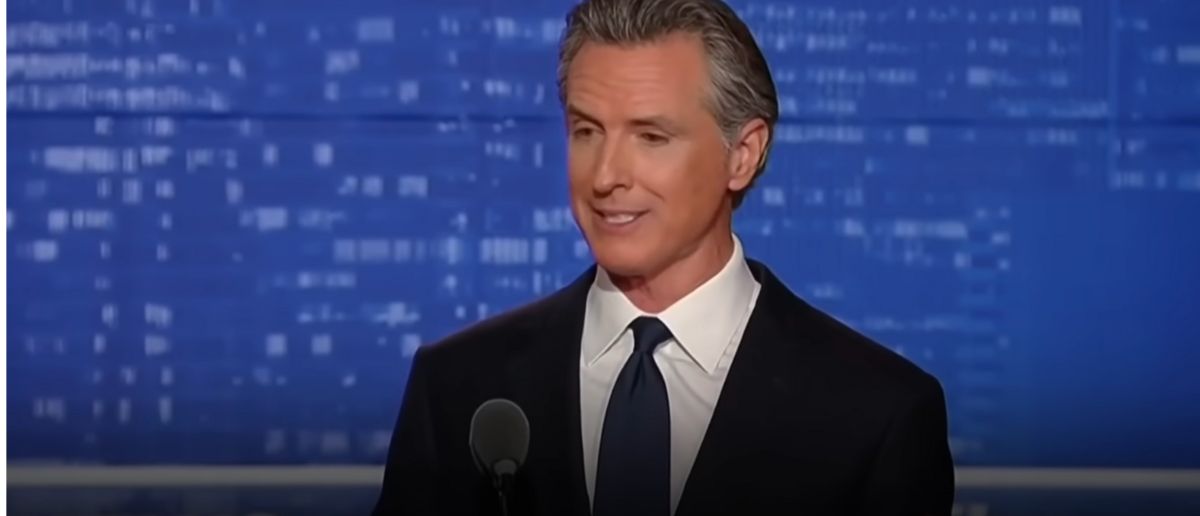
Newsom is doing all he can to create an inoffensive look. He wants to be a White House contender.
And now Gavin Newsom threw his own team under the bus with a massive backtrack no one saw coming.
California Governor Gavin Newsom engaged in a candid and frequently intense conversation with conservative commentator Ben Shapiro on the latest episode of his podcast, This is Gavin Newsom.
The Thursday discussion, which quickly gained traction across social media platforms, exposed clear differences between the governor’s own expressed views and the sharper language previously deployed by his official communications channels—most notably in response to a deadly incident involving federal immigration agents.
The core tension arose from a stark post issued by the @GovPressOffice account shortly after the January 7, shooting death of Renee Good, a 37-year-old mother of three, during an ICE operation in Minneapolis.
The official message consisted of just three emphatic words: “STATE. SPONSORED. TERRORISM.” This phrasing ignited widespread outrage and fueled protests criticizing aggressive federal enforcement tactics under the current administration.
When Shapiro confronted Newsom directly about that wording—“Your press office tweeted out that it was state-sponsored terrorism”—and asserted firmly, “Our ICE officers obviously are not terrorists. A tragic situation is not state-sponsored terrorism,” the governor offered a concise reply: “Yeah, I think that’s fair.”
By agreeing with the critique, Newsom effectively stepped away from the inflammatory characterization, suggesting such rhetoric only deepens national divisions rather than fostering constructive dialogue around the tragedy.
Shapiro followed up by inquiring about broader ICE policy, including persistent calls from certain progressive voices to dismantle the agency entirely. Newsom made his stance unmistakable, declaring he “disagreed” with abolishing ICE.
He went on to defend California’s sanctuary framework, explaining that federal immigration responsibilities belong to federal authorities rather than local law enforcement, while noting limited cooperation does occur in contexts like state correctional facilities.
Shapiro challenged this approach, arguing it has allowed significant numbers of undocumented individuals to remain in the state, though Newsom contested that interpretation.
The podcast ventured into several other polarizing subjects that contributed to its rapid spread online.
On the topic of gender identity and school curricula, Shapiro repeatedly asked whether biological s*x can change and if public education should instruct young students that boys can become girls. Newsom hesitated noticeably before responding, “Yeah … well, I think … for the grace of God … yeah,” then pivoted to emphasize the small number of people affected and the surrounding atmosphere of “hate, and bigotry, so much condemnation.”
Shapiro countered that stating biological realities constitutes neither bigotry nor hate but rather “rationality and biological simplicity,” and he objected to teaching otherwise in K-12 settings. Newsom avoided a straightforward affirmation or denial despite multiple prompts.
Additional segments touched on President Trump’s foreign policy record (which Shapiro described as exceptionally strong), speculation about future elections including 2028 scenarios, California’s high income tax burden, persistent housing shortages, economic contributions from immigrants, and broader questions of political trust and truth in an era of heightened polarization.
The exchange produced numerous shareable clips, particularly around the ICE exchange and the gender discussion, prompting commentary from across the spectrum. Some interpreted Newsom’s responses as a pragmatic adjustment under direct questioning, while others viewed them as a retreat from bolder positions held by allies in his orbit.
Adding to the contrast, First Partner Jennifer Siebel Newsom posted on X the day after the incident, condemning the violence and calling for accountability from federal authorities and the Trump administration, reinforcing a more confrontational tone on the same issue.
Overall, the podcast captured enduring national fault lines on immigration enforcement, cultural questions, and rhetorical style as debates rage on in the opening weeks of 2026.