America has been financing Europe’s defense. That all changes now.
Because Trump took a huge victory lap after Europe stepped up to the plate.
A Continent That Finally Heard The Wake-Up Call
Norway became the ninth nation to join France’s expanding nuclear deterrence initiative on Wednesday. It’s a development worth pausing on — because it represents exactly what thirty years of American pleading, cajoling, and threatening failed to produce, and what a single Trump term and a half has finally delivered.
European nations are, for the first time in the post-Cold War era, taking their own defense seriously. Not as a diplomatic talking point. Not as a percentage target on a conference communiqué. Seriously.
France’s “forward deterrence” initiative now includes Norway, Germany, Poland, the Netherlands, Belgium, Denmark, Sweden, Greece, and the United Kingdom — nine nations engaged in real discussions about how France’s independent nuclear arsenal could contribute to European security, what planning exercises look like, and whether French strategic air forces could be temporarily hosted on their territory. France, as the EU’s sole nuclear-armed nation, retains sole authority over any deployment decision. But the architecture being built is something genuinely new: a continental deterrence framework that does not depend entirely on American nuclear weapons stationed in Europe.
Norwegian Prime Minister Jonas Gahr Støre was careful to note that “our deterrence will continue to be provided by NATO” — a reassurance as much to Washington as to Oslo — and that France had consulted both NATO and the U.S. before expanding the initiative. What was left unsaid is equally revealing: a year ago, this conversation was barely happening at all.
The Trump Effect — Called Out Plainly
It requires no particular analytical acuity to connect what is happening to why it is happening. Trump spent years telling European governments, in terms ranging from diplomatic to blunt, that the era of free-riding on American military guarantees was over. “If they don’t pay, I’m not going to defend them,” he said in 2025. At the Hague NATO summit earlier in 2026, alliance members agreed to spend 5% of GDP on defense-related investments by 2035 — a dramatic leap from the 2% benchmark that most members had been failing to meet for years.
That is the context in which Norway joined France’s nuclear initiative. That is the context in which Germany, once constitutionally and culturally allergic to any discussion of nuclear weapons, is now participating in deterrence planning. That is the context in which the UK — which has its own independent nuclear deterrent — has signed on to a framework that suggests the strategic weight of European nuclear capability should be thought of as a collective European resource rather than a national one.
Trump himself gave Macron a “8 out of 10” rating as an ally in March. “Not perfect, but it’s France,” he said. That is Trump’s version of a diplomatic endorsement, and Macron has leveraged it shrewdly — positioning France as the anchor of a more self-reliant European security architecture while maintaining enough relationship with Washington to not be dismissed as a rival.
Unanswered Questions — And Why The Stakes Are Too High To Get Wrong
The initiative is real, and its momentum is significant. But it leaves consequential questions unanswered. France has not announced plans to permanently station nuclear weapons in participating nations. What exactly a “forward deterrence” commitment means in terms of response thresholds, decision timelines, and red lines remains deliberately vague. Ambiguity is a feature of deterrence strategy — it forces adversaries to plan for worse outcomes — but it also creates risks of miscalculation that structured alliance commitments are designed to minimize.
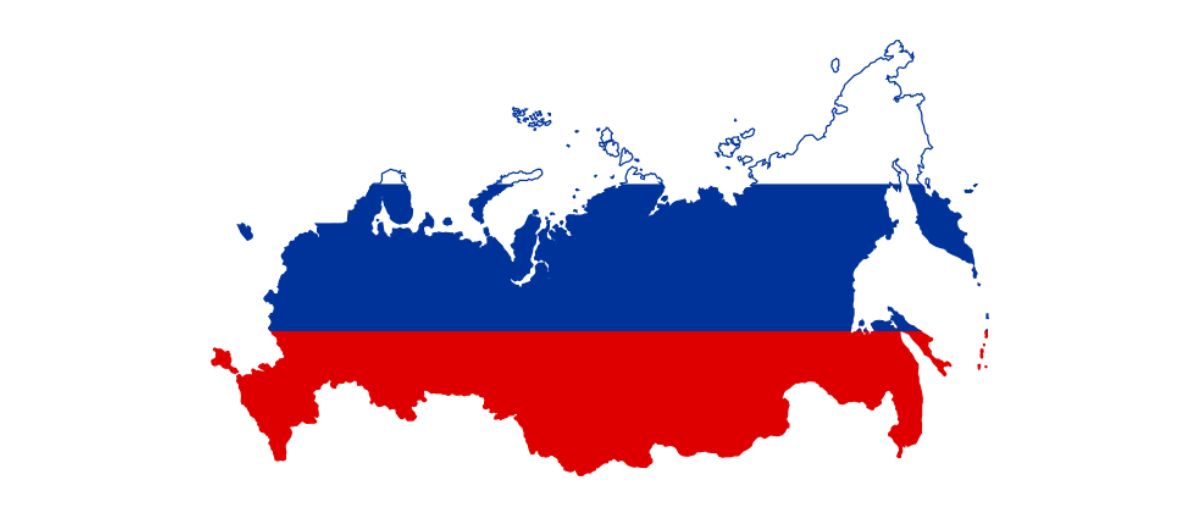
Russia’s response has been predictably hostile. Moscow has repeatedly warned Macron against making nuclear “threats,” mocking him as “Micron” while publicly questioning the credibility of a French deterrent extended to nine countries simultaneously.
Whether Putin finds it credible matters enormously, and that credibility question will ultimately be answered not by communiqués but by what European governments spend, train, and deploy in the years ahead. The direction of travel is unmistakably right. The destination — a Europe genuinely capable of deterring aggression without depending on American boots for survival — remains a work in progress. For a continent that was still debating 2% targets three years ago, that is remarkable progress.