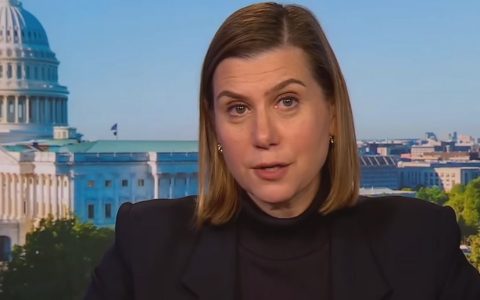
Warren loves to play as a working-class champion. She’s anything but it.
And now Elizabeth Warren was just outed for being a huge hypocrite.
THE LONGEST-RUNNING CHAMPION WHO DIDN’T USE THE PRODUCT
For more than a decade, Sen. Elizabeth Warren of Massachusetts held the flag for IRS Direct File higher than virtually anyone in Congress. She called it a solution to the “junk fees” that private tax preparers extract from ordinary Americans. She celebrated its pilot program. She introduced legislation to make it permanent. She went to the Senate floor on Tax Day 2026 to deliver a floor speech on its behalf.
“Filing your taxes should be easy and free,” she said from the Senate floor in April. “Let’s save people time and money, and show the American people that government can work for them.”
What Warren apparently chose not to do, however, is file her own taxes through it.
Records show that when Direct File launched a pilot program serving Massachusetts residents for the 2024 tax-filing season, Warren used a private accountant instead. The senator, who described herself as one of the program’s primary legislative architects and publicly praised it as a way for taxpayers to “save hours of their time and the $150 typically spent on TurboTax and other junk filing fees,” opted for the exact kind of private tax preparation she had spent years urging ordinary Americans to abandon.
THE FINE PRINT — AND WHY IT MATTERS
Warren’s office and supporters will note, accurately, that she was technically ineligible for Direct File during the 2024 season because she chose not to take the standard deduction that year. The program was designed for taxpayers with simpler returns, and Warren’s financial picture — as a senior senator with investment income, property holdings, and other complex items — exceeded what the program was built to handle.
That’s a real limitation. But it’s also precisely the criticism that Direct File’s opponents had been making all along: the program was too narrow, too limited in the tax situations it could accommodate, and therefore not the universal solution Warren portrayed it as. The senator who championed Direct File as a transformative program for all Americans ended up being ineligible to use it herself, illustrating in her own tax return the gap between the program’s marketing and its reality.
“For years, Senator Warren has been the Direct File program’s biggest champion — yet her own tax returns show she hired a private accountant,” David Williams, president of the Taxpayer Protection Alliance, told Fox News Digital. “Direct File was ill-equipped to handle investment, property and interest income — limiting the tax credits and deductions Americans deserve. At its core, the government would not have any incentive — as the tax preparer, collector, and auditor — to maximize those deductions,” he added.
The conflict-of-interest argument that conservatives have raised about Direct File since its inception goes to exactly this point. The IRS is simultaneously the agency that prepares returns under Direct File, collects the taxes those returns generate, and audits taxpayers for underpayment. That triple role creates structural incentives that are not aligned with taxpayers’ interests — a concern that Warren, who has built her entire political brand around identifying how institutions tilt toward the powerful at the expense of ordinary people, seems to have tacitly acknowledged with her own wallet.
A PROGRAM ON THE WAY OUT — AND A SENATOR STILL FIGHTING FOR IT
The Trump administration moved to suspend Direct File in 2025, and the IRS subsequently informed states the program would not be available for the 2026 filing season. Rather than accepting the outcome, Warren brought fresh Direct File legislation directly to the Senate floor on Tax Day 2026, forcing Republicans on the record against the program and keeping the issue alive for the midterm cycle.
The raw political numbers tell a cautionary tale about the program’s actual reach. During the 2024 pilot season, just 161,042 of the estimated 19 million eligible Americans filed through Direct File — a utilization rate of less than one percent. Among those who did use it, 90% rated their experience positively according to the IRS, though the Taxpayer Protection Alliance’s FOIA analysis found a quarter of users reported negative experiences. Whatever the correct figure, a program that reached fewer than one in a hundred eligible taxpayers in its home state — while its most prominent champion quietly hired a private accountant — may be a more useful symbol of progressive governance than Warren intended: big on rhetoric, limited in real-world application, and defended with particular fervor by the people least likely to be affected by it.