There are plenty of criminals in America. But this is just insane.
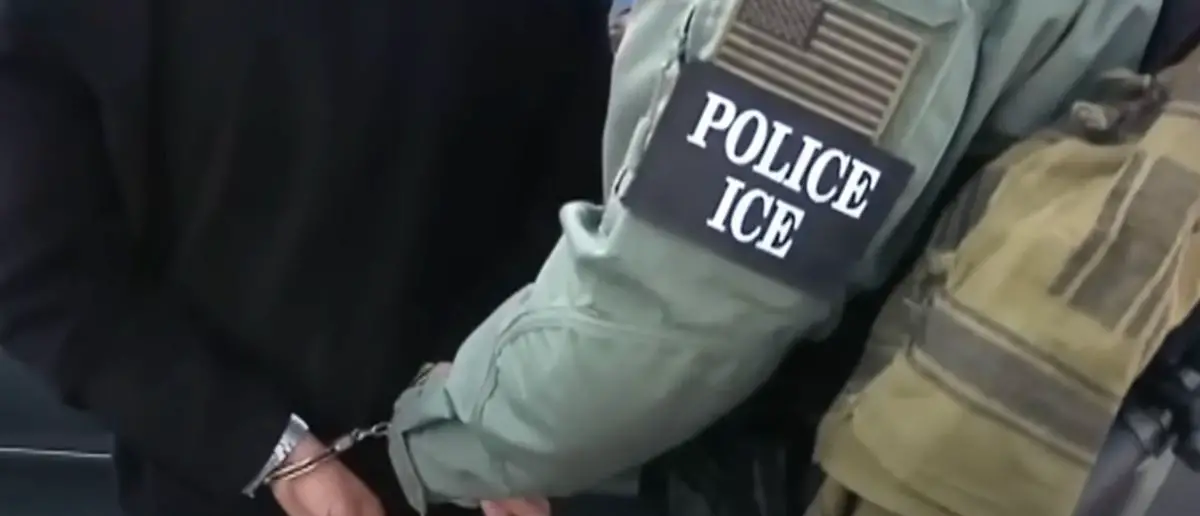
Now ICE announced the deportation of a violent war criminal.
For almost twenty years, a man accused of some of the most horrific human rights atrocities imaginable was allowed to quietly live in the United States, protected by a broken immigration system that let him slip through the cracks time and again. This week, Immigration and Customs Enforcement finally corrected that failure, removing Amos Sheik Massaquoi, a former Liberian combatant believed to have ordered k*llings, torture, and the recruitment of child soldiers during his country’s brutal civil wars.
ICE deported the 55-year-old Massaquoi to Liberia on August 11, according to officials who confirmed the removal to Fox News Digital. Massaquoi is believed to have served as chief bodyguard to Major General Daniel Chea, a senior leader within Charles Taylor’s National Patriotic Front of Liberia, one of the rebel factions responsible for a civil war that claimed the lives of almost 250,000 people, the overwhelming majority of them civilians, according to United Nations figures.
The scope of what Massaquoi is accused of participating in should turn the stomach of anyone who reads it. According to ICE, he is believed to have ordered and personally participated in extrajudicial k*llings, acts of torture, arbitrary arrests and detentions, and the forced labor and recruitment of child soldiers during Liberia’s civil wars, which raged from 1989 to 2003. These weren’t isolated incidents in the fog of war — this was systematic brutality carried out against a civilian population already suffering through one of Africa’s deadliest conflicts.
ICE Chicago Field Office Director Frank Padula didn’t mince words about what this deportation represents. “If you are a confirmed human rights violator and you believe you can hide in the United States, you are mistaken,” Padula said. “ICE will pursue, arrest and remove any individuals who committed atrocities abroad and ensure our communities are not used as a sanctuary from accountability.” That’s exactly the kind of firm, unapologetic stance Americans should expect from an agency tasked with protecting the country’s borders and its communities.
The timeline of how Massaquoi managed to remain in the country for so long reveals troubling gaps that allowed him to slip through the system for years. He legally entered the United States back in August 2006, but his authorization to remain expired just months later, on November 6 of that same year. Rather than departing as required, Massaquoi simply stayed, disappearing into American communities for well over a decade before Homeland Security Investigations finally caught up with him in Maryland in August 2019, arresting him for being illegally present in the country.
Remarkably, an immigration judge granted him bond less than two months after that arrest, and he was released back into American communities yet again. It wasn’t until April 2025, nearly six years later, that ICE Baltimore took him back into custody, this time because he had failed to comply with the terms of his earlier release. An immigration judge finally ordered his removal the following month, setting in motion the process that culminated in his August 2026 deportation.
This case exposes exactly the kind of systemic failure that has allowed dangerous individuals to exploit gaps in America’s immigration enforcement system for years. A man accused of orchestrating mass atrocities abroad was able to enter the country, overstay his authorization, get arrested, get released on bond, and continue living freely in the United States for the better part of two decades before finally facing consequences. That’s not a system working as designed — that’s a system that failed for far too long, and one the current administration deserves credit for finally fixing.
There’s an even more disturbing wrinkle to this story. ICE says Massaquoi also received specialized military training at an academy in China back in 2004, just one year after Liberia’s second civil war officially ended. That detail raises serious questions about what exactly he was preparing for, and whether his time in the United States afterward was simply about evading accountability for his past or potentially something more concerning.
For context on just how serious the underlying conflict was, Charles Taylor — the rebel leader turned Liberian president whom Massaquoi allegedly served — was later convicted of aiding and abetting war crimes committed by rebel forces in neighboring Sierra Leone. Taylor received a 50-year prison sentence from the Residual Special Court for Sierra Leone, one of the most severe international war crimes sentences handed down in recent memory. Massaquoi’s alleged proximity to that level of leadership within Taylor’s forces underscores just how serious the accusations against him actually are.
HSI Maryland Special Agent in Charge Akil Baldwin summed up the moral stakes clearly. “Amos Sheik Massaquoi is believed to have engaged in cruelty and terror, marked by k*llings, torture, forced labor, unlawful imprisonment and the recruitment of children into armed conflict,” Baldwin said. “If it is confirmed that an individual has engaged in such bloodshed anywhere in the world, then you have no place in the United States.” That’s a principle every American should be able to get behind regardless of their politics — this country should never serve as a safe haven for people credibly accused of war crimes and crimes against children.
This deportation is part of a much larger, ongoing effort that deserves far more public attention than it typically receives. ICE’s Human Rights Violators and War Crimes Center, which supported this investigation, has been tracking suspected atrocity perpetrators attempting to enter or remain in the United States since 2003. In that time, the agency has arrested more than 520 people for human rights-related violations and successfully removed 1,178 known or suspected human rights violators. The center has also intercepted more than 415 suspected war criminals and human rights abusers before they could even enter the country in the first place.
Those numbers should offer some reassurance to Americans concerned about exactly this kind of threat slipping through the cracks, but Massaquoi’s case also demonstrates how much work remains. Nearly twenty years is far too long for an individual accused of these kinds of atrocities to remain in the country, arrested once, released on bond, and left to live freely for additional years before enforcement finally caught up with him. The Trump administration’s aggressive posture on tracking down and removing exactly this category of dangerous individual represents precisely the kind of immigration enforcement priority that should command bipartisan support.
Anyone with information about a suspected human rights violator currently living in the United States can contact the ICE tip line directly or submit information online — a reminder that identifying and removing individuals like Massaquoi often depends on tips from the public and vigilant law enforcement work rather than the system catching these cases automatically. Massaquoi’s removal closes one chapter on a case that should never have taken this long to resolve, but it also stands as proof that accountability, however delayed, remains achievable when the political will exists to pursue it.