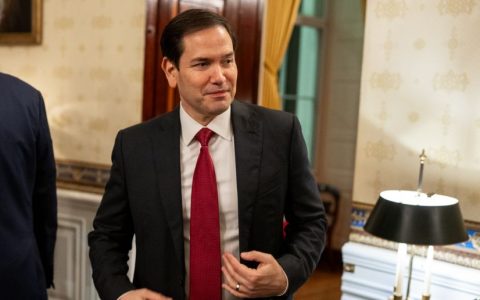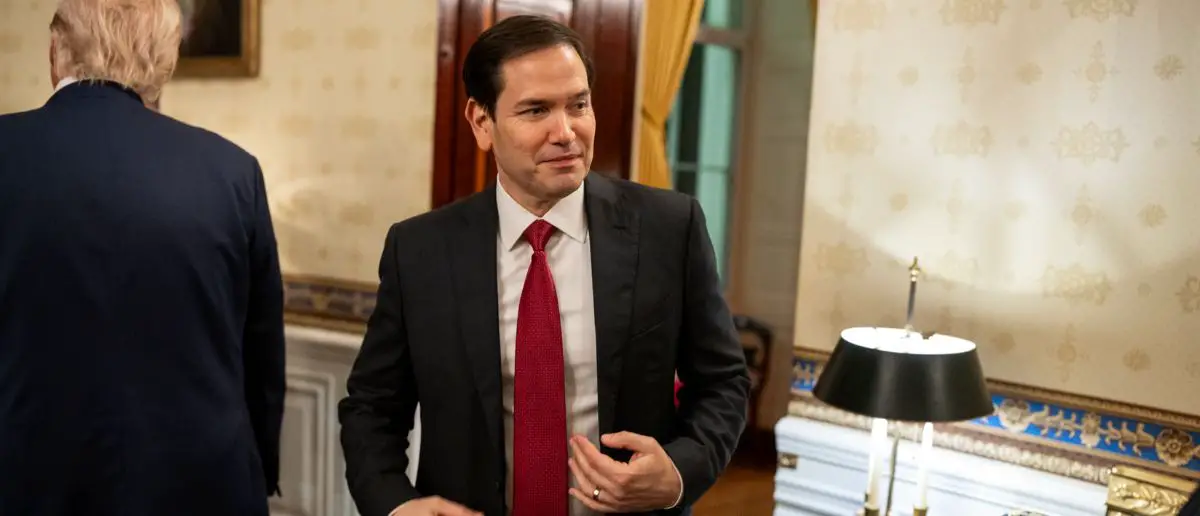
Rubio has changed a lot over the years. He’s not as timid as he used to be.
And now Marco Rubio made a massive announcement that is dropping jaws.
For years, unelected international bureaucrats in The Hague have claimed the power to haul American soldiers and officials before a foreign tribunal that no American voter ever authorized. This week, the Trump administration decided to stop tolerating it. Secretary of State Marco Rubio announced Friday that the United States is slapping sweeping financial sanctions on the International Criminal Court itself, the first time Washington has gone after the institution rather than just the individuals running it.
The move escalates a campaign the president has waged throughout his second term. Until now, the administration had sanctioned 17 individuals tied to the court, including judges and prosecutors. Targeting the body as a whole takes the fight to an entirely different level, and Rubio left no doubt about the message he wants delivered in every capital that still pretends this court has legitimate authority over free nations.
“Our message is clear: the United States and the American people are not subject to the jurisdiction of this fake ICC,” Rubio said in a pre-recorded video released Friday morning. He added, “Both parties agree on this, but only President Trump has the resolve to take the action needed to end this threat once and for all.” That line deserves attention. Plenty of Washington politicians have grumbled about the ICC over the years, yet this is the first administration to actually pull the trigger.
Here is what the sanctions do. Any ICC assets under American jurisdiction will be frozen, and Americans, U.S. businesses and banks are generally barred from doing business with the court. There is a grace period, though. The Treasury Department issued a 180-day general license so the court can keep operating while it decides whether to address American concerns. In other words, the administration is handing The Hague a chance to back down before the penalties bite.
Rubio made the stakes plain. “Either the ICC will end its threats, or we will end the ICC. And we expect our allies, many of whom are part of the ICC and that rely on American service members for their defense, to rein in this rogue court,” he said. He went on, “If they do not, the United States will continue its campaign to dismantle the ICC piece by piece until Americans are threatened no longer.” Note the pointed reminder to allies: many of the governments that fund this court depend on American troops to keep their own countries safe.
The court responded the way entrenched institutions always do when someone finally pushes back. In a statement, the Netherlands-based body called the sanctions “an assault on the rule of law and on the very foundations of the international legal order.” It described itself as an independent judicial institution “created by treaty and entrusted by 125 States Parties” and said the penalties are “an attempt to obstruct the course of justice and to prevent the Court from doing what it was created to do.” The Americans who actually pay the price when foreign judges decide to reach across the Atlantic were not consulted.
ICC President Tomoko Akane, who was personally sanctioned by the administration back in August, insisted the court will carry on regardless. That defiance only strengthens the case that this institution believes it answers to no one. A court that shrugs off the objections of the world’s largest economy and military power, while claiming jurisdiction over that power’s citizens, is not a neutral referee. It is an institution with an appetite for authority it was never granted.
The administration’s worry about American personnel is not imaginary. Back in 2017, an ICC prosecutor sought authorization to investigate alleged war crimes by U.S. military and intelligence personnel in Afghanistan. Judges initially turned the request down, but that decision was overturned on appeal in 2020, clearing the way for the investigation to move forward. The court’s prosecutor later de-prioritized alleged crimes involving American personnel to concentrate on the Taliban and ISIS-K, but the precedent was set, and the door was left open.
Rubio also argued the ICC believes it can go after American service members and even Border Patrol agents. It is worth being straight about that claim: there is no evidence the court has sought to investigate or prosecute Border Patrol agents, though Rubio raised that possibility in July. Supporters of the sanctions would say the point is that nothing in the court’s own claims of jurisdiction rules it out, and that Americans should not have to wait for a warrant before objecting.
Another major grievance is the court’s decision to issue arrest warrants for Israeli Prime Minister Benjamin Netanyahu and former Defense Minister Yoav Gallant back in 2024, over Israel’s military response to the October 7 Hamas-led terrorist attacks. Both men deny wrongdoing. President Trump called the warrants “baseless” in a February 2025 executive order authorizing sanctions against ICC officials, and noted that Israel is not even a member of the court. The ICC maintains it can exercise jurisdiction over nationals of non-member states when the alleged crimes occur on the territory of a state that accepted its authority.
That dispute gets at the heart of why so many conservatives distrust the whole enterprise. A court that claims power over citizens of countries that never signed up for it, based on the choices of other governments, is exercising authority without consent. For a movement rooted in the idea that legitimate government rests on the consent of the governed, an unaccountable international tribunal reaching for American leaders is a straightforward affront.
The timing carried its own irony. The sanctions came just hours after this year’s Nobel Peace Prize went to Navanethem “Navi” Pillay, a former ICC judge. The prize committee’s taste is its own business, but the optics of an international establishment celebrating one of the court’s own while Washington moves to shut off its money tell you how wide the gulf has grown between those who staff these institutions and the Americans who are supposed to be subject to them.
There is also some recent housekeeping that hurts the court’s credibility. The chief prosecutor who went after Netanyahu was suspended over s*xual misconduct allegations, an episode the administration has not hesitated to cite when questioning the court’s judgment. Whatever one thinks of any individual case, an institution that wants to be treated as the moral arbiter of the world cannot afford that kind of cloud over its leadership.
What happens next depends on whether European allies take Rubio’s warning seriously. The 180-day clock gives them time to rein in the court before the sanctions fully kick in. If they do not, the administration has made clear it will keep dismantling the institution piece by piece. Either way, the era of quietly tolerating foreign judges who claim jurisdiction over American service members is over, and Americans who have long wanted their government to defend their sovereignty finally have an administration willing to act on it.