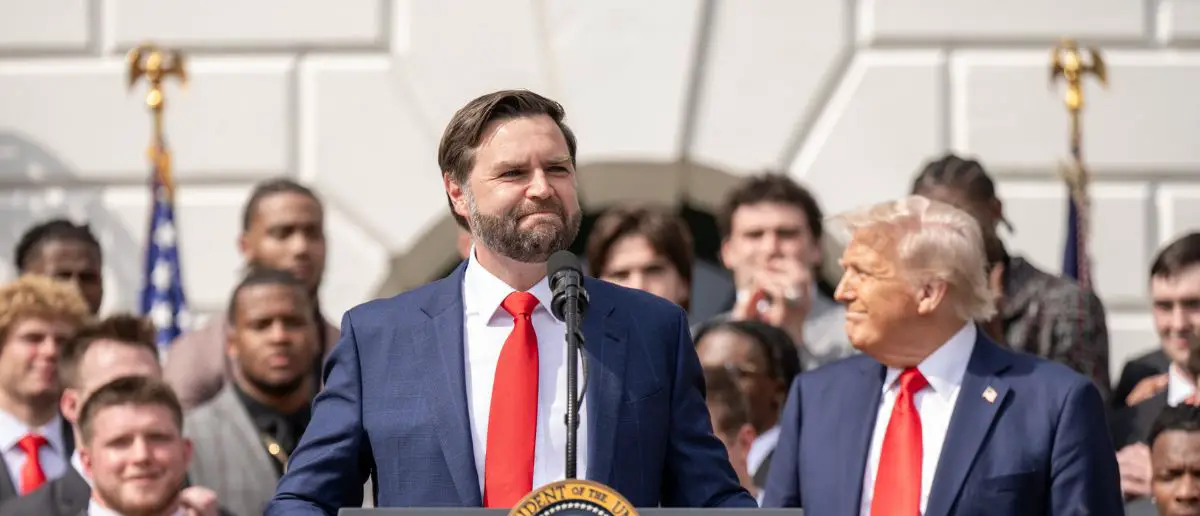
Many thought Vance was the definite nominee. Things may be changing.
And now JD Vance made a 2028 announcement that is raising eyebrows.
In a town where almost everyone with a national profile spends years pretending not to run for president while quietly doing nothing else, Vice President JD Vance just gave a refreshingly human answer. Asked point-blank whether there was a chance he would not seek the White House in 2028, he said the one thing professional politicians rarely say: yes.
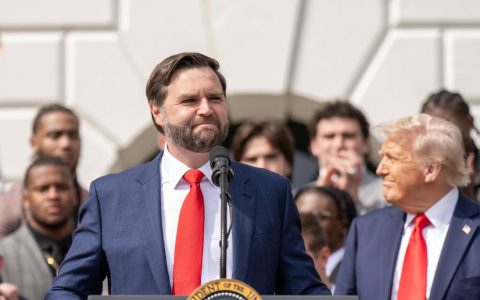
The exchange came during an hourlong CBS News town hall in Flat Rock, Michigan, with anchor Tony Dokoupil, released Saturday night. Asked whether there was any possibility he would not run, Vance replied, “Of course there’s a chance.” That answer matters because Vance has been widely viewed as the leading contender to succeed President Trump, who has called him his “most likely” Republican successor.
Vance did not offer a script. He described himself as a “procrastinator” when facing major life decisions and said he would “have to think about it.” He pointed to the people he goes home to at night: his four young children and his wife, Usha Vance, who he said “has never loved politics” but “loves public service.”
That last line deserves some attention. Americans are used to hearing political spouses described as natural campaigners who cannot wait to hit the trail. Vance is describing a family that treats public service as a calling and politics as a burden, and he is willing to say so in front of a national audience.
He also made clear that he is not spending his days plotting a campaign. “I hate thinking about it,” he said, and he told Dokoupil he would turn his attention to the question after the polls close in November rather than allow speculation about 2028 to distract from the current campaign. Dokoupil pressed him on whether he and his wife had already begun discussing their future, suggesting such a major decision would naturally feature in family conversation. Vance rejected that suggestion.
That fits a pattern. In an earlier interview, Vance told Fox News host Sean Hannity that “we’re going to win the midterms, we’re going to do everything that we can to win the midterms, and then after that, I’m going to sit down with the president of the United States and talk to him about it.” He has also said he does not see Secretary of State Marco Rubio, whom he has called his best friend in the administration, as a rival, and that neither man is entitled to the nomination.
The same town hall produced news on other fronts. Vance defended the administration’s handling of the war with Iran, arguing the U.S. had “in some ways … won decisively,” while acknowledging that the other side still matters. “The enemy gets a vote here,” he said. He said Washington was seeking a “final firm commitment from the Iranians that they’re not going to rebuild their nuclear program.”
He also defended the administration’s economic policy, blaming former President Joe Biden for neglecting the manufacturing sector while acknowledging that reversing its decline would take time. For voters worried about prices and jobs, that is a fair statement of the case the administration has to make: the problems were decades in the making, and the repairs will not be finished overnight.
For conservatives who see Vance as the heir to the America First movement, his candor may cause a flutter of nerves. The idea that the likeliest successor might pass on the job is unsettling to a movement that wants continuity. But there is a case that his honesty is a strength. A candidate who treats a presidential run as a decision to be earned, rather than an entitlement, is the kind of person many Americans say they want.
It also puts Republicans on notice that they should not assume the 2028 field is settled. Rubio, other governors and rising figures could all be part of the conversation, and the best outcome for a movement built on populist energy is a real contest in which the strongest ideas win.
The immediate task is simpler. With the midterms about two weeks away, Vance’s message to his own side is to stay focused on winning in November. Whatever he decides afterward, the way he handled the question tells us something about him: he is willing to admit uncertainty, he puts his family at the center of the choice, and he does not appear to think the presidency is owed to him.
That is not the usual script for an ambitious politician. In a political culture that rewards fake certainty, Vance’s “of course there’s a chance” may be the most refreshing thing anyone in Washington has said all week.