Not every judge has it out for law and order. Sometimes they make the right decision.
And now Republicans just won a massive legal victory that stopped Democrats in their tracks.
COURTS PUMP THE BRAKES ON VIRGINIA’S DEMOCRATIC GERRYMANDER — LEGAL WAR NOW HEADED TO STATE SUPREME COURT
Virginia Democrats popped the champagne twenty-four hours too early. Less than a day after voters narrowly approved a redistricting referendum that would have handed the party up to four additional U.S. House seats, a Virginia circuit court judge blocked the state from enacting the new congressional maps — ruling the constitutional amendment underlying the vote invalid from the start.
The ruling came from Tazewell County Circuit Court Judge Jack Hurley, who determined that the legislature’s constitutional amendment and the referendum voters approved were procedurally defective, ordering that “any and all votes for or against the proposed constitutional amendment in the April 21, 2026 special election are ineffective.” The Republican National Committee, which had filed suit to block the referendum, notched a significant if temporary legal victory.
Virginia Attorney General Jay Jones, a Democrat, vowed an immediate appeal. “As I said last night, Virginia voters have spoken, and an activist judge should not have veto power over the People’s vote,” Jones declared. “We look forward to defending the outcome of last night’s election in court.”
It was a combative response — but also a revealing one. Democrats labeled a judge ruling on a procedural challenge an “activist” within hours of the decision. The speed of that characterization, the reflexive dismissal of a legitimate legal ruling as political, speaks to a party accustomed to getting its way in Virginia’s courts.
WHAT THE COURT ACTUALLY FOUND
Judge Hurley’s ruling did not strike down the referendum on policy grounds or overturn the will of the voters in some sweeping ideological sense. His court focused on procedural and constitutional arguments about how the amendment was passed — including timing requirements and legislative steps that the amendment’s sponsors allegedly failed to follow. These are precisely the kinds of technical disputes that appellate courts are built to adjudicate, and that legislatures are supposed to get right before sending measures to voters.
The same Tazewell Circuit Court had previously sided with Republican lawsuits against the referendum, only to be overruled by the Virginia Supreme Court, which allowed the April 21 vote to proceed while reserving judgment on the underlying legal questions. Those questions are now heading back to Virginia’s highest court, which will have the final say on whether the voter-approved map can take effect.
The stakes are enormous. The Democrat-drawn maps were described by the University of Virginia Center for Politics as “baconmandered” — a creative cartographic exercise that sliced Northern Virginia’s heavily Democratic precincts across five congressional districts, each snaking deep into Republican territory, designed to produce a 10-1 Democratic advantage in the state’s congressional delegation. Prince William County alone would go from two congressional districts to five under the new maps. Fairfax County would jump from three to five.
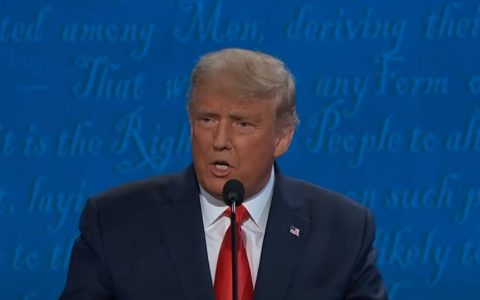
Democrats insisted this was an emergency counter to Republican redistricting elsewhere. Minority Leader Hakeem Jeffries framed the party’s approach as “forceful, temporary, as a direct reaction to what MAGA extremists have done, and at all times approved by the voters.” President Trump, characteristically blunt, called the referendum a “rigged election” and the ballot language “purposefully unintelligible and deceptive.”
A LEGAL BATTLE THAT WILL SHAPE THE MIDTERMS
For now, the Tazewell ruling creates a pause, not a final verdict. The Virginia Supreme Court, which has already weighed in once to allow the vote to proceed, must now decide whether the amendment itself was validly enacted under state law. The appeal is expected to move swiftly given the electoral timeline bearing down on both parties.
Republicans — including the RNC, the National Republican Congressional Committee, and Rep. John McGuire, who would effectively be gerrymandered out of his Richmond-area district under the new maps — remain confident the procedural defects in the amendment’s passage are fatal to its implementation. Democrats are betting the Supreme Court of Virginia will defer to the voters’ expressed preference over technical procedural objections.
What is not in dispute is the broader picture: Virginia has become the sharpest front in a national redistricting war that has already swept through Texas, California, Ohio, North Carolina, Missouri, Florida, and Indiana. The outcome of the Virginia Supreme Court’s ruling — and what follows it — will go a long way toward determining which party controls the U.S. House after November.
The courts have inserted themselves into that fight. Whether that is an “activist” judiciary or the rule of law working exactly as designed depends entirely on whether you like the ruling.