The Left is unhinged. They can’t even control their emotions.
And now a Liberal Congressman breaks down in tears for one humiliating reason.
A Memphis Institution, Carved Into Pieces
Steve Cohen has been Tennessee’s only Democratic member of Congress for nearly two decades. He is 76 years old, a fourth-generation Memphian, and one of the last white Democrats to represent a Southern district in the U.S. House of Representatives. Friday, he announced he is done — his career effectively ended not by a primary loss or a voter rebellion, but by a map.
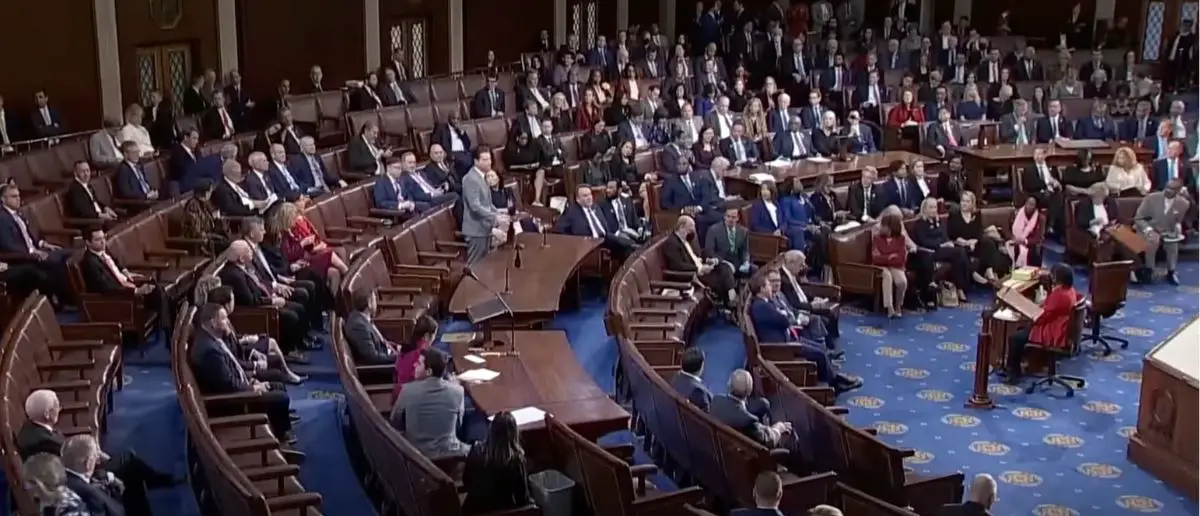
At a press conference in his Washington office, surrounded by photographs of Memphis and mementos of the projects he championed over nineteen and a half years, Cohen was visibly emotional as he described what it felt like to have his district dismantled. Speaking on-air in the aftermath, tears came.
“I don’t want to quit. I’m not a quitter,” he told reporters. “But these districts were drawn to beat me.”
He is correct. Tennessee Republicans, operating with a supermajority in the state legislature and the tailwind of the Supreme Court’s Louisiana v. Callais ruling, enacted a new congressional map this month that carves Cohen’s majority-Black Memphis-based 9th District three ways — slicing it into portions of the 5th, 8th, and 9th districts, each now configured to lean Republican. Tennessee was the first state to pass new congressional maps following the Callais decision, which significantly weakened federal Voting Rights Act protections that had for decades shielded majority-minority districts from exactly this kind of restructuring.
Cohen said he “considered” running in one of the new districts — but quickly concluded they were “nothing like the 9th district that I’ve represented.” He has filed a legal challenge and left open the possibility of reentering the race if a court restores the original boundaries. Few observers expect that to happen.
The Human Cost — And The Political Meaning
Cohen’s announcement is simultaneously a genuinely poignant moment in American political life and a concrete measurement of how consequentially the redistricting war has shifted.
He has been a colorful and sometimes combustible presence on the House Judiciary Committee — remembered among other things for arriving at a 2019 hearing where then-Attorney General William Barr was a no-show with a bucket of fried chicken and a ceramic chicken figurine as a prop. His politics are squarely on the Democratic left, and his representation of a majority-Black district in Memphis gave him a platform that he used, by almost any fair accounting, to advocate seriously for his constituents over a long period of time.
Whatever one thinks of his politics, the image of a 76-year-old congressman surrounded by decades of memories, choking up as he describes his district being deliberately dismantled, is not something that lends itself to celebration. It is the human face of what redistricting actually does to real people.
The political meaning, however, is exactly what Trump and Republican state leaders intended. House Speaker Mike Johnson has publicly predicted the GOP could gain up to eight House seats from the current redistricting wave. Cohen’s retirement — and his assessment that it would take “an unbelievable registration effort among Democrats” and massive turnout to compete in any of the new districts — validates that projection.
The Wave — And What Comes Next
Cohen’s retirement is the 59th by a sitting House member this election cycle, the second-highest total since 1930. He will not be the last. Democrats warn that as many as a third of Congressional Black Caucus members could be voted out as a result of the post-Callais redistricting wave sweeping the South. Republicans in Louisiana, Alabama, South Carolina, and Georgia have all moved or are moving to redraw maps in ways that target Black-majority Democratic seats.
Tennessee House Speaker Cameron Sexton stripped Democratic members of all committee assignments after protests erupted in the state chamber over the redistricting vote — a dramatic demonstration of how far Republicans are prepared to go to cement their majorities. Cohen himself characterized Tennessee’s likely future as “an entirely Republican congressional delegation” — and a state that would find itself “out of the loop” once Democrats eventually regain the White House.
Hakeem Jeffries issued a statement calling Cohen “a powerful champion for civil rights” and promising Democrats would keep fighting. It was the right thing to say. But no statement changes the map — and the map, as of May 2026, increasingly belongs to Republicans.