The leaks out of the White House are constant. Even those no longer working there are getting in on the action.
And now a former Trump official broke the news on a major Iran war development.
A Former Intelligence Chief’s Argument — And The White House’s Response
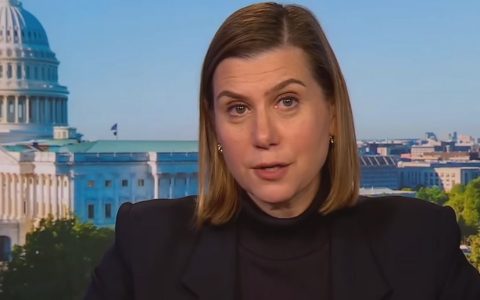
Joe Kent resigned as Director of the National Counterterrorism Center in March in protest of the Iran war. He has been clear about his reasons: he believes the intelligence community assessed, prior to Operation Epic Fury, that Iran was not actively developing a nuclear weapon, and that a negotiated framework superior to Obama’s failed JCPOA was within reach — before it was lost.
This week, Kent sharpened that argument publicly, posting a detailed assessment on X that cuts directly against the White House’s strategic framing of the conflict.
“Prior to letting the Israelis lead us into this war, President Trump was actually poised to cut a better deal than the JCPOA (aka the Obama Iran deal),” Kent wrote. “The Iranians feared and respected Trump in a way they never respected Obama — he took out the terror mastermind Qasem Soleimani, yet was prudent enough not to get sucked into the quicksand of another Middle Eastern quagmire that would only favor Iran and strengthen its hardliners.”
Kent’s argument has a factual foundation that is difficult to dismiss entirely. In the thirty months before Trump took office for the second time, Iranian proxies attacked American troops and diplomats approximately 350 times, according to CENTCOM Commander Adm. Brad Cooper’s Senate testimony Thursday. But those attacks stopped almost immediately after Trump returned to the White House in January 2025. Kent attributes that to Iran’s fear of Trump specifically and their desire to negotiate a deal with him — rather than to a change in strategic circumstances.
“Iran’s proxies attacked our troops & diplomats under Biden, NOT under this Trump admin prior to Epic Fury,” Kent posted. “When Trump returned to office in January of 2025 those attacks stopped.”
The White House’s Counter — And Why It Matters
The administration’s response to Kent was unsparing. White House spokesman Davis Ingle delivered it without diplomatic padding.
“Joe Kent’s self-aggrandizing resignation letter and recent comments are riddled with lies. Most egregious are Kent’s false claims that the largest state sponsor of terrorism somehow did not pose a threat to the United States and that Israel forced the President into launching Operation Epic Fury. As Commander-in-Chief, President Trump took decisive action based on strong evidence which showed that the terrorist Iranian regime posed an imminent threat and was preparing to strike Americans first. President Trump’s number one priority has always been ensuring the safety and security of the American people.”
The competing narratives represent a genuine and consequential internal debate about the Iran conflict — one that is unlikely to be resolved cleanly regardless of how the war ends. Adm. Cooper’s testimony provides the White House with a significant empirical anchor: 350 attacks over 30 months, roughly one every third day, constitute a sustained campaign of hostility that does not resemble the behavior of a nation earnestly pursuing a diplomatic off-ramp. Kent’s rebuttal — that those attacks were under Biden, not Trump’s second term — is technically accurate but doesn’t fully account for the broader pattern of Iranian proxy aggression or the state of Iran’s nuclear program.
What ‘Poised’ Really Means — And Whether It’s Enough
Kent’s claim that Trump was “poised” to make a better deal than the JCPOA is simultaneously the most compelling and most speculative element of his argument. The JCPOA was, by any fair assessment, a deeply flawed agreement — it left Iran’s nuclear infrastructure largely intact, provided massive sanctions relief in exchange for temporary enrichment limits, and was bound by sunset clauses that would have allowed Iran to resume full enrichment within a decade. Trump was right to withdraw from it in 2018. The question is whether what follows the current military campaign will be better.
The administration’s position — that military pressure is the only language the Iranian regime understands, and that anything less than full dismantlement of Iran’s enrichment capacity is unacceptable — reflects a genuine strategic judgment about what is possible and what is necessary. Kent’s position is that Trump’s leverage was already sufficient before the war began, and that the war has now strengthened Iran’s hardliners rather than weakening them — a concern that a number of independent analysts share, even if they disagree about the original calculus.
What both sides agree on: whatever deal eventually emerges from the Iran conflict must be dramatically better than what Obama produced in 2015. The nuclear clock is ticking. Energy Secretary Wright testified Thursday that Iran is weeks away from weapons-grade enrichment capability. Trump went to Beijing partially to secure a commitment from Xi Jinping not to supply Iran with military equipment — an assurance Trump says he received. That is leverage being exercised in real time. Whether it is enough, and whether the war was the necessary price, is a question history will answer.