America bankrolls Europe’s defense. There’s no denying that.
And now NATO allies got a brutal wake-up call thanks to Donald Trump.
Germany Blinks — Too Late
For weeks, German Chancellor Friedrich Merz took the comfortable path: publicly criticizing the American-led campaign to strip Iran of its nuclear capability, telling audiences in Marsberg that Washington was being “humiliated by the Iranian leadership” and calling for the conflict to end “as quickly as possible.” It was the kind of rhetoric that plays well in the salons of Western Europe — morally elevated, strategically hollow, and free of cost.
The cost has now arrived.
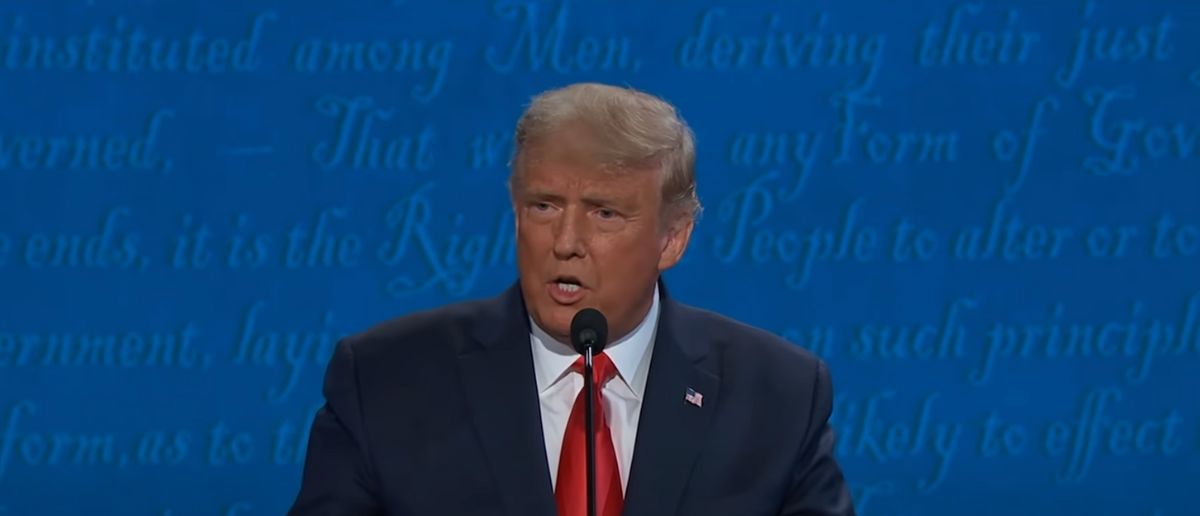
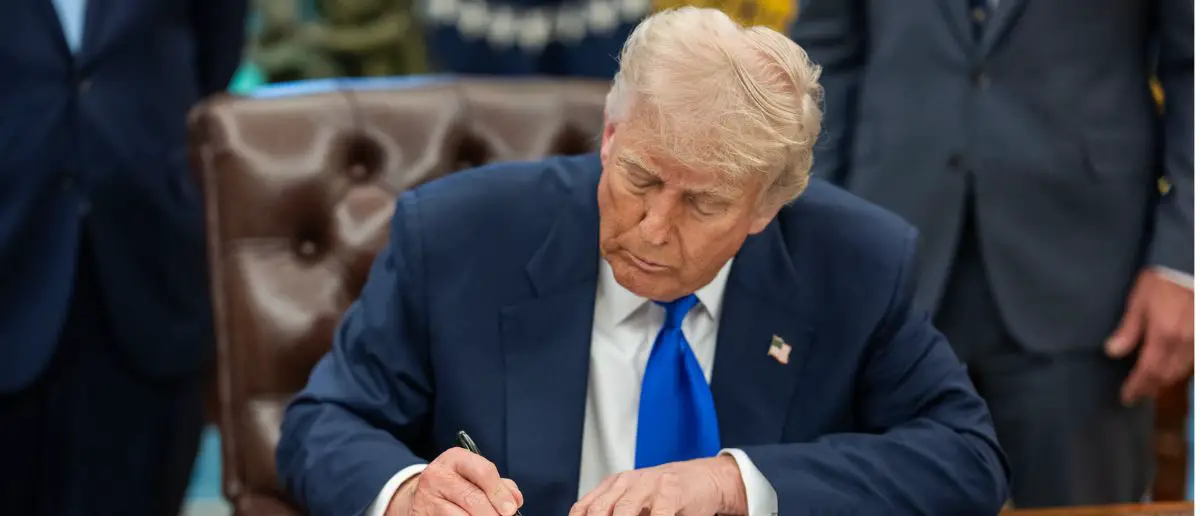
Trump announced a drawdown of U.S. troops from Germany — starting with 5,000, and quickly signaling the number would go higher. “We’re gonna cut way down. We’re cutting a lot further than 5,000,” the president said. Germany hosts more than 36,000 active U.S. service members, more than any other European nation, and the strategic implications of significant reductions are ones Berlin is only now beginning to reckon with.
In an apparent state of panic, Merz reversed himself almost immediately, posting on X that “The United States is and will remain Germany’s most important partner in the North Atlantic Alliance. We share a common goal: Iran must not be allowed to acquire nuclear weapons.” The walk-back came without acknowledgment of what had changed or why. The answer, of course, is transparent: Trump made clear that words have consequences.
Nile Gardiner, director of the Margaret Thatcher Center for Freedom at The Heritage Foundation and a former advisor to Lady Thatcher herself, was unsparing in his assessment. “The lack of support for the United States has been nothing less than treacherous. I think the president has the right to be outraged by the lack of support from key European allies.” Of Merz’s original remarks, Gardiner said: “comments like these actually help the propaganda of the Iranian dictatorship. It is astonishing that a German chancellor would make these kinds of remarks at a time of war… and the German chancellor is giving comfort to the Iranian regime. It is disgusting.”
Spain And Italy: From Ally To Obstacle
Germany is not alone in facing Trump’s frustration. Spain’s socialist Prime Minister Pedro Sánchez has taken what Gardiner describes as the most hostile posture of any NATO ally — forbidding the use of American military bases in Spain for refueling or operational preparation and publicly calling the U.S.-Israeli campaign against Iran “illegal.” All of this while remaining conspicuously silent on Iran’s execution of thousands of protesters and its accelerating pursuit of nuclear-weapons-grade uranium.
Trump did not mince words when asked directly about troop reductions in Spain and Italy. “I mean, they haven’t been exactly on board. Yeah, probably. Yeah, I probably will… Italy has not been of any help to us. And Spain has been horrible. Absolutely horrible.”
Gardiner’s verdict on Madrid: “The Spanish have been the worst by a long way. At least the Germans and Italy have allowed the use of its own bases. The Spanish have refused to cooperate in any way with the war.”
Italy’s case is complicated by its unique relationship with the administration. Prime Minister Giorgia Meloni had been among Trump’s closest European allies — and her reluctance to fully back the Iran campaign appears to have genuinely surprised and disappointed the president. Trump told Italian newspaper Corriere della Sera: “I’m shocked at her. I thought she had courage, but I was wrong.” Secretary of State Marco Rubio is expected to visit Rome and the Vatican this week in part to repair that relationship, though the damage runs deep.
A Civilizational Question — And Europe’s Answer
France denied American and Israeli military aircraft overflying French territory en route to operations against Iran. The United Kingdom declined to get involved at all. Trump addressed the UK directly in a Truth Social post: “All of those countries that can’t get jet fuel because of the Strait of Hormuz, like the United Kingdom, which refused to get involved in the decapitation of Iran, I have a suggestion for you. Number 1, buy from the U.S., we have plenty, and Number 2, build up some delayed courage, go to the Strait, and just TAKE IT. You’ll have to start learning how to fight for yourself, the U.S.A. won’t be there to help you anymore, just like you weren’t there for us. Iran has been, essentially, decimated. The hard part is done. Go get your own oil!”
Gardiner frames Europe’s posture as something more serious than transient political disagreement — as a symptom of civilizational decline. “There is a very deep-seated cultural appeasement in Europe towards the Iranian regime that goes back many decades, and a flat-out refusal to accept the reality of the immense dangers of a nuclear-armed Iran. European leaders are sleepwalking toward destruction with this perilous path they have taken.” He added: “If you listen to European leaders, it’s as if the U.S. is the villain here.”
His conclusion is bleak but difficult to dismiss: “Europe has fundamentally changed over the last twenty years beyond recognition, and yet Europe’s ruling elites accept it seemingly as a fact. And future generations will have to pay the price for the course Europe is taking now.”
Trump’s willingness to name that reality — and back it with action — is precisely what distinguishes his foreign policy from the endless diplomatic hedging of his predecessors.