The Chinese Communist Party knows it can’t compete with us. So they have to steal our secrets.
And now the FBI uncovered a huge Chinese spying plot right under our noses.
Just as she was about to board a flight back to Shanghai, federal agents caught up with a California realtor accused of secretly surveilling the family of Taiwan’s president on American soil at the direction of the Chinese Communist Party. It’s exactly the kind of brazen foreign espionage operation that should alarm every American concerned about Beijing’s ever-expanding campaign to intimidate and surveil its adversaries, even within the borders of the United States itself.
Wanying Zhang, 34, of Irvine, California, also known by the alias “Heather,” was arrested at Los Angeles International Airport on a federal charge of acting as an unregistered agent of the People’s Republic of China. First Assistant U.S. Attorney Bill Essayli announced the arrest on X with characteristic bluntness: “We just arrested a Chinese foreign agent at LAX attempting to depart for China.”
The details laid out in the criminal complaint are genuinely chilling. According to federal authorities, Zhang traveled to the Seattle area in 2025 at the direction of Chinese officials specifically to photograph, record, and track the family of a relative of Taiwanese President Lai Ching-te. CBS News, citing law enforcement sources, identified the target as Ting-Yu Lai, the U.S.-based son of the Taiwanese president — a detail notably absent from the federal complaint itself but confirmed through separate reporting.
Essayli didn’t mince words describing the operation’s sophistication. “She coordinated the trip with an associate and used tradecraft to avoid detection,” he wrote, adding the obvious but important legal point: “She never notified the Attorney General she was acting for a foreign government, a federal offense.” Speaking later on The Big Weekend Show, Essayli confirmed the stakes bluntly: “She was conducting surveillance on behalf of the Chinese government. She was acting as a foreign agent. And she was spying on a relative of the president of Taiwan here in the U.S.”
The operational details read like something out of a spy thriller, except this happened in an ordinary American suburb. According to the FBI affidavit, Zhang and an associate flew from Las Vegas to Seattle on September 1, 2025, rented a black Nissan Rogue, and staked out the family’s home. When the target returned, a neighbor’s security camera reportedly captured the pair sitting up and holding out phones to photograph or record the family — which, disturbingly, included children who arrived shortly afterward.
FBI Special Agent Kevin Holt documented the surveillance in granular detail, noting that Zhang reclined her seat “as if to avoid being seen” while her associate took pictures. Zhang allegedly messaged a Chinese government contact in real time during the operation: “Saw him. Young male. It’s that young one,” followed by “I am videorecording,” before sending two license plate numbers directly to her handler.
The tradecraft didn’t stop there. Days later, Zhang reportedly instructed her associate to transfer the surveillance photos via AirDrop rather than through conventional messaging apps, specifically telling him in an audio message, “Seattle pictures, don’t send via WeChat or text. Must be sent over the air.” Agent Holt noted this was likely an attempt to avoid detection by circumventing monitored communication channels. The associate later told Zhang he had deleted the photos and cleared them from his deleted folder — what Holt described as an apparent effort to destroy evidence after the fact.
Investigators believe Zhang received her actual assignment during a June 2025 meeting with a Chinese government contact in Changsha, China, where she allegedly told the contact, “I can take care of this thing.” That kind of direct tasking from Chinese officials, followed by methodical operational planning and deliberate evidence destruction, paints a picture of a genuinely professional intelligence operation rather than some kind of freelance curiosity.
The strategic motive behind targeting a Taiwanese president’s relative specifically in the United States deserves serious attention. Holt warned that information about a senior Taiwanese official’s family members, including their homes and vehicles, could provide Beijing with significant leverage over Taiwan’s president during a potential future conflict. “Engaging in surveillance of a close relative of a high-ranking member of Taiwan’s government is not normal diplomatic behavior, especially inside of the United States,” Holt wrote in the affidavit. Given the Chinese Communist Party’s explicit and ongoing ambitions toward Taiwan, that kind of leverage represents a genuine and serious national security concern, not an abstract diplomatic grievance.
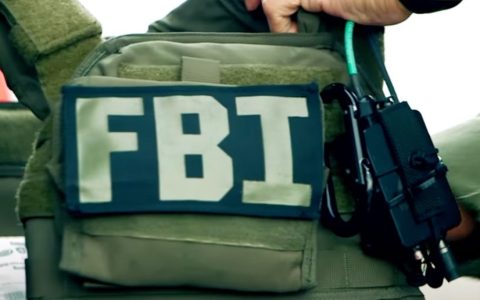
FBI Director Kash Patel wasted no time delivering a pointed warning to foreign adversaries following the arrest. “Foreign adversaries take note: America is no longer a safe place to run your espionage operations,” Patel said. “Allegedly surveil a foreign leader’s family on U.S. soil for the PRC — and try to catch a flight back to Shanghai? Not happening. This FBI is hunting threats to our national security wherever they hide — and bringing them to justice.”
Essayli emphasized this isn’t an isolated California phenomenon either, warning that Beijing’s intelligence apparatus is actively exploiting individuals already embedded within American communities nationwide. “China’s very good at using people who are already here,” Essayli said. “I don’t think it’s unique to California. It is happening nationwide.” That’s a sobering reminder that Chinese espionage operations in the United States don’t require smuggling trained intelligence officers across the border — they can simply recruit naturalized citizens and long-term residents already living ordinary American lives.
This case also arrives on the heels of a separate, troubling episode involving former Arcadia Mayor Eileen Wang, who agreed to plead guilty to acting as an illegal Chinese agent in a case involving paid efforts to spread pro-Beijing propaganda within the United States. Taken together, these cases suggest a pattern of Chinese influence and intelligence operations reaching deeper into American civic and community life than many Americans likely realize.
Zhang is scheduled to appear in federal court in Los Angeles, and as Essayli rightly noted, she remains presumed innocent until proven guilty. But the detailed tradecraft, the direct foreign government tasking, and the specific targeting of a Taiwanese president’s family member on American soil all point to exactly the kind of brazen foreign intelligence activity that should put every American on notice: Beijing’s espionage apparatus is operating inside American communities, using American citizens, against American principles of safety and sovereignty — right here at home, not just abroad.