AOC needs to take a step back. She has no idea what she’s talking about.
Now Alexandria Ocasio-Cortez made an asinine argument that no one is buying.
A Statement That Says More About The Speaker Than The Subject
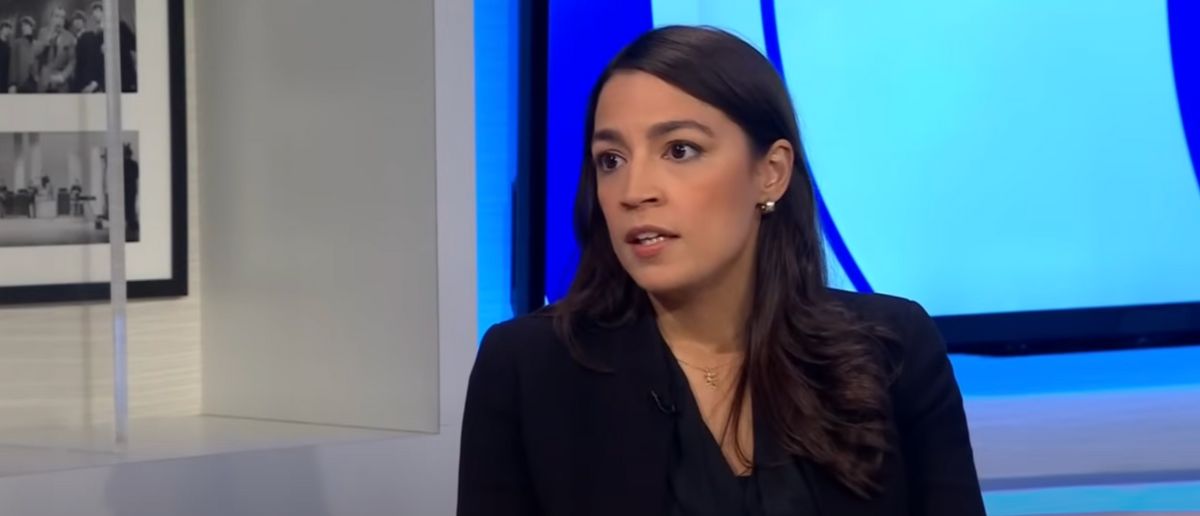
Alexandria Ocasio-Cortez is not backing down. After drawing sharp criticism for her claim that it is impossible to become a billionaire through legitimate work, the New York congresswoman returned to the argument this week with even less nuance than she started with — and added a new element that will presumably not endear her to the tens of millions of Americans who either own small businesses, hold stock in large ones, or simply reject the idea that every wealthy person is, by definition, a criminal.
In a podcast interview, Ocasio-Cortez doubled down on her characterization of billion-dollar wealth accumulation as a “myth” — meaning, in her telling, that it is not actually possible to earn that kind of money through legitimate means. She went further, claiming that large fortunes are not built through talent, risk-taking, or innovation, but through “abuse” — of workers, of systems, of communities.
It is the kind of statement that plays extremely well in the progressive media ecosystem and extremely poorly everywhere else — which may explain why AOC has become simultaneously one of the most recognized Democratic politicians in the country and one of the most reliable contributors to her party’s ongoing struggles with working-class voters who take a dim view of being told their economic aspirations are morally suspect.
The Argument — And Why It Falls Apart On Contact With Reality
The claim that billionaires “can’t earn” their wealth is a staple of the democratic socialist worldview, and AOC has been its most prominent American advocate since she burst onto the national scene in 2018. The argument rests on a labor theory of value that most mainstream economists abandoned long ago — the idea that wealth is a fixed pie, that every dollar held by a rich person is a dollar taken from a poor one, and that the creation of enormous value through innovation, risk, and capital allocation is either impossible or irrelevant.
The real-world evidence against it is voluminous. Amazon, whatever one thinks of its labor practices, did not extract its $1.5 trillion market capitalization from existing wealth — it created value that did not exist before, by building logistics infrastructure and cloud computing capacity that now underpins a significant fraction of the global economy. The same is true of Apple, Microsoft, and virtually every other large technology company. The workers who built those companies were paid for their labor. The shareholders who took the risks of early-stage investment were compensated for bearing those risks. That the founders and early investors ended up with enormous wealth is a function of the scale of value they created — not proof that someone else was robbed.
AOC’s “abuse” framing gestures toward real concerns — labor exploitation, regulatory capture, corporate consolidation — that deserve serious policy responses. But bundling those concerns into a blanket assertion that all large wealth is illegitimate does not produce good policy. It produces a political posture that sounds righteous to a progressive base while alienating the much larger pool of voters who aspire to financial security and are not interested in being told that aspiration is inherently corrupt.
The Political Cost Of Economic Maximalism
The irony is that the issues AOC genuinely cares about — wage stagnation, housing costs, healthcare access — are ones where serious policy arguments exist and where a significant number of Americans are potentially persuadable. The “billionaires can’t earn their wealth” framing forecloses those conversations by starting from a premise that most people don’t share and can’t be argued into sharing.
AOC’s podcast interview is not an outlier in her political identity — it is its fullest expression. She is one of the most intellectually consistent elected officials in Washington, in the sense that her positions follow directly from her underlying worldview. That worldview holds that capitalism is inherently extractive, that large wealth accumulation is inherently illegitimate, and that the correct response is a fundamental restructuring of the economy. Most Americans — including most Democrats — do not share that starting premise. Until progressives reckon honestly with that reality, the gap between the movement’s cultural confidence and its electoral performance is unlikely to close.